
Quick Answer
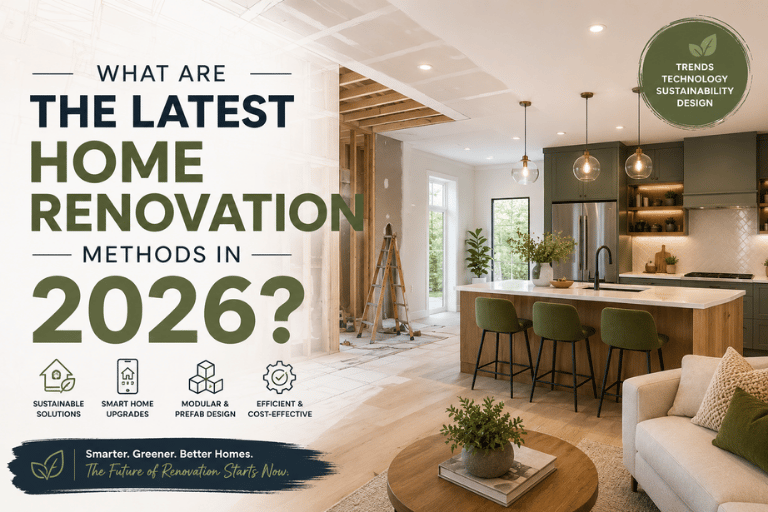
Modern home renovation methods include modular construction, prefabrication, digital project tracking, and smart material selection. These approaches reduce delays, control costs, and improve quality.
Home renovation has traditionally been associated with delays, cost overruns, and uncertainty. However, modern techniques are transforming the process—making it faster, more transparent, and more efficient.
1. Modular Renovation
Modular renovation involves building components off-site and assembling them on-site.
Benefits:
- Faster execution
- Better quality control
- Minimal on-site disruption
2. Prefabrication Technology
Prefabricated elements are manufactured in controlled environments.
Why it works:
- Reduces human error
- Speeds up installation
- Ensures consistency
3. Digital Project Management
Modern renovation uses technology for transparency.
Features include:
- Real-time progress tracking
- Budget monitoring
- Timeline updates
4. Smart Materials
New-age materials improve durability and reduce maintenance.
Examples:
- Waterproof plywood
- Engineered wood
- Scratch-resistant laminates
5. Faster Turnaround Time
With streamlined workflows, modern renovations are completed much quicker.
6. Fixed Pricing Models
Many modern service providers offer fixed pricing.
Advantage:
- No unexpected cost overruns
- Better financial planning
Common Problems Solved by Modern Methods
- Contractor delays
- Budget uncertainty
- Poor quality execution
Final Takeaway
Modern renovation methods focus on efficiency, transparency, and quality. By adopting these techniques, homeowners can avoid traditional renovation challenges and achieve better results.